Graduate lab
USC Liquid Propulsion Lab
Student lab at USC that designs, builds, and tests bipropellant liquid rocket engines and fluid systems. usclpl.com
FireX System Lead
ATLAS fluids system
2025 – present
Fluid systems
Fluids
Designed FireX as its own stand and tank, with two flex hoses and nozzles aimed at the engine bay and ATLAS.Requirements
Test ops
Wrote what FireX had to do: put out post-shutdown fires on ATLAS and in the engine bay, on the test controller’s command, without fighting a live engine.Python
Analysis
Wrote the nozzle-flow and Cv calculator that closed tank size, 0.30 GPM/ft² spray density, and component selection.CAD
CAD / hardware
Led structure and CAD for the FireX stand so it could sit next to ATLAS and still be built in the shop.Manufacturing
CAD / hardware
Built the stand. Design reviews were not the end of the job.
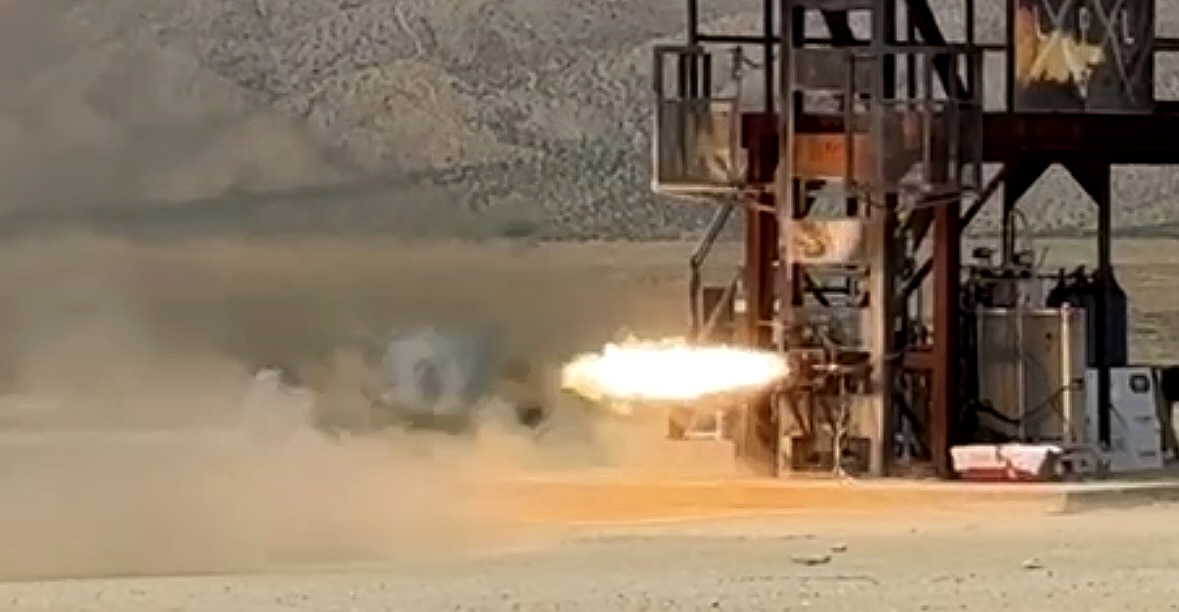
At USC’s Liquid Propulsion Lab I led a team to design, fabricate, and implement FireX — a GN2-pressurized water system that puts out fires on ATLAS, our mobile fluid system, and in the engine bay. Nova is the next engine and brings substantial risk. FireX is the mitigation so the next anomaly does not take vital hardware with it.
- Defined system requirements
- Designed the fluid architecture
- Wrote a nozzle-sizing calculator that closed tank, solenoid, and regulator selection
- Led CAD and structure for the FireX stand
- Authored and conducted the FireX design reviews
- Manufactured the stand
Deep diveFireX deep diveOpenClose
Requirements and P&ID
Architecture
I designed FireX as a standalone stand, separate from ATLAS, so test controllers can toggle it on or off whenever they choose. I wrote the requirements, drew the P&ID, and selected the components.
- Suppress post-shutdown fires on ATLAS and in the engine bay
- Commandable by the test controllers — on or off at their discretion
- Independent engine-bay and ATLAS nozzles, or both at once
- Does not fight a live engine; controllers shut the engine down first
- Own stand and tank, so a fire on ATLAS does not take FireX with it
Spray density and Cv
Sizing
The open question was how to size the water tank and the nozzles. NFPA 15 sets fire-suppression spray density between 0.15 and 0.50 GPM/ft². I ran a trade on the tank pressure needed to hit that band versus the cost of a larger volume, and I closed on 0.30 GPM/ft². I sized the tank and the nozzle outlet diameters to that density, and those numbers set the Cv I needed from every component in the line.
Sizing calculator
def required_flow_per_nozzle_area(area_ft2, density_gpm_ft2,
                                  nozzle_count=2, safety_factor=1.25):
    flow_per_nozzle = area_ft2 * density_gpm_ft2 * safety_factor
    return flow_per_nozzle, flow_per_nozzle * nozzle_count

def nozzle_pressure_from_orifice(q_gpm, d_in, Cd=0.62):
    # Q = Cd * A * sqrt(2 ΔP / ρ)
    q = q_gpm * GPM_TO_M3S
    area = math.pi * (d_in * 0.0254) ** 2 / 4
    dp_pa = 0.5 * WATER_DENSITY * (q / (Cd * area)) ** 2
    return dp_pa / 6894.76  # psi

def calculate_cv(q_gpm, dp_psi, sg=1.0):
return q_gpm * math.sqrt(sg / dp_psi)- 48 ft²
- Covered area
- 34 gal
- Tank
- 0.25"
- Nozzle diameter
Test Conductor
Nomad hot fire
2026
Test operations
Test ops
Test Conductor for Nomad. I had to know ATLAS well enough to run a live fire of the lab’s flagship engine.
I also served as Test Conductor for LPL’s recent firing of Nomad, the lab’s flagship engine. The role demanded a high-level understanding of ATLAS and put me on the hardware for a live fire.